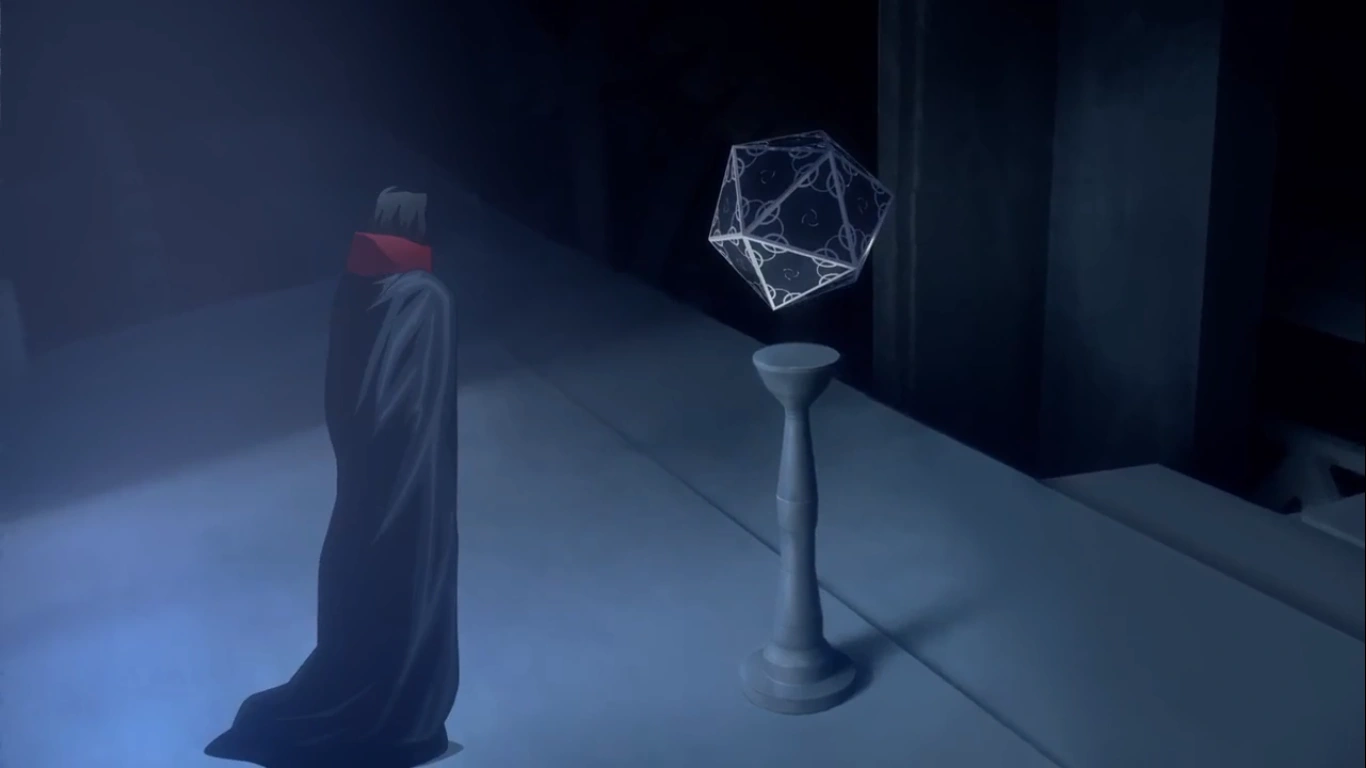
A Save Room, or Save Point, is a safe area within Dracula's Castle (as well as other external locations in some games) where a weary traveler can rest and heal their wounds. These holy chambers became a staple in the Castlevania series when semi-open world and role-playing elements were implemented to more recent games, colloquially known as "metroidvanias" (starting with Castlevania: Symphony of the Night from 1997), due to newer gaming systems no longer requiring a password feature.
These rooms allow the player to restore all their HP and MP, recover from any negative status effects they may be afflicted with, and also save the game's progress. They won't restore used Hearts, however.
Often they have only one exit, making them side rooms and not part of a main path, however save rooms with two exits do appear in some titles. They usually are located near other important rooms or landmarks, such as Warp Rooms, Transition Rooms or Boss Rooms.
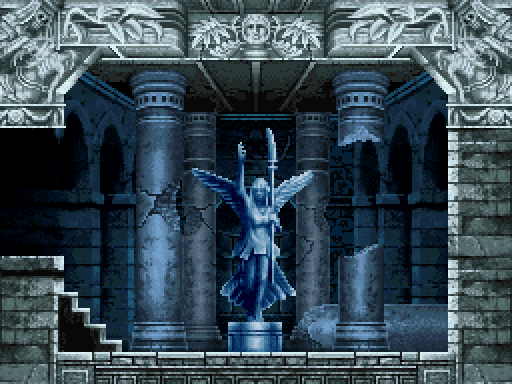
A Save Room usually features the statue of a goddess or an angel who heals the player. Enemies cannot appear inside a Save Room.
In Castlevania: Symphony of the Night, a pulsating icosahedron is found spinning in midair instead; this transforms into a coffin, wrapping around Alucard for him to rest inside. In that same game, Alucard eventually finds a fake, purple-colored Save Room in the Underground Caverns. Attempting to rest inside of it results in him being trapped in a nightmare world where he is attacked by a Succubus. If the system memory is unable to create more files for the game, the coffin will have the same texture as the icosahedron and will morph back into the icosahedron.
In Castlevania: Circle of the Moon, inside of Save Points, Nathan Graves finds a pedestal holding a crystal ball which contains a mysterious floating red sphere. When he uses the save point, the sphere will increase in size and an intense light will fill the room; the light will then fade out and the crystal container will now be empty. The Save Point can no longer be used until the player reenters the room. This is the only Save Point design that was never reused or reimagined in any of the sequels.
In Castlevania: Harmony of Dissonance, Juste Belmont also finds floating icosahedrons inside of Save Rooms like those in Symphony of the Night; however, once activated, the icosahedron will disappear in a flash of light and won't transform into a coffin. Additionally, the Save Rooms in the second castle lose most of their colors, becoming plain white.
In Castlevania: Lament of Innocence, HP is restored only when entering the magic circle on the floor of a Save Room. However, unlike the rest of the games in the series, MP won't be restored (it can only be restored by guarding/perfect guarding against enemies' special attacks).
In Castlevania: Curse of Darkness, if the player is near a Save Room, a pointer will appear below them to show the door's location.
In addition, the teleportation system of Dracula's Castle is directly modeled after the icosahedrons found in the Save Rooms from Symphony of the Night.


_clean.png "Ecclesia (11) clean.png (45 KB)")